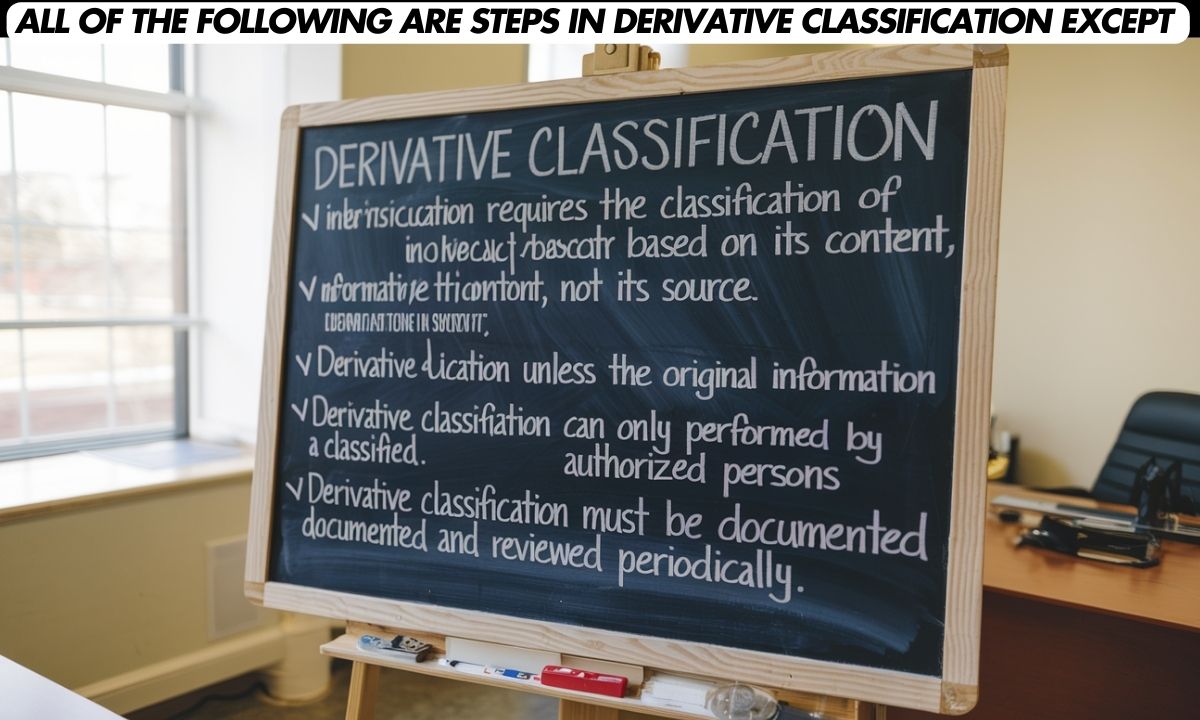
In today’s high-stakes world of information security, understanding derivative classification isn’t just important – it’s crucial. Whether you’re a new security professional or a seasoned analyst, knowing what does and doesn’t fall under derivative classification can make the difference between maintaining national security and compromising sensitive information.
What is Derivative Classification?
Derivative classification forms the backbone of our national security information management system. Unlike original classification, where authorities make initial decisions about information sensitivity, derivative classification involves using existing classified information to create new documents. Think of it like following a recipe – you’re using pre-established ingredients (classification markings) to create something new while maintaining the original security requirements.
The process requires careful attention to detail and a thorough understanding of security protocols. For instance, if you’re working with a document that contains information from multiple classified sources, you’ll need to ensure your new document reflects the highest level of classification from among those sources.
The Essential Steps of Derivative Classification
1. Identifying Source Documents
The foundation of derivative classification starts with properly identifying your source materials. Security professionals must verify the classification guides and original documents they’re working with. This means checking for:
- Valid classification markings
- Current classification guides
- Proper authority signatures
- Up-to-date declassification instructions
2. Determining Classification Levels
When determining classification levels, analysts must consider multiple factors. Here’s a breakdown of the standard classification levels and their implications:
| Classification Level | Access Requirements | Impact of Disclosure |
| Top Secret | Stringent background checks | Exceptionally grave damage to national security |
| Secret | Moderate clearance requirements | Serious damage to national security |
| Confidential | Basic clearance needed | Damage to national security |
3. Marking Requirements
Proper marking of derivative classified documents requires attention to specific details. Every document must include:
- Banner markings at the top and bottom of each page
- Portion markings for each section
- Classification authority block
- Declassification instructions
“Proper marking is not just about following rules – it’s about ensuring the right people have access to the right information at the right time.” – Department of Defense Security Manual
4. Duration Assessment
Understanding how long information should remain classified is crucial. Factors to consider include:
- Original source document declassification dates
- Automatic declassification triggers
- Event-based declassification requirements
- Extended classification justifications
What’s Not Part of Derivative Classification
Here’s where we address our key focus: All of the following are steps in derivative classification except these important exceptions:
- Creating New Classification Levels
- Derivative classifiers cannot invent new classification categories
- They must use existing levels from source documents
- Making Original Classification Decisions
- This authority belongs solely to Original Classification Authorities (OCAs)
- Derivative classifiers cannot make independent classification decisions
- Changing Classification Duration
- Cannot extend classification beyond source document timelines
- Cannot create new declassification schedules
- Policy Creation
- Cannot establish new classification policies
- Must follow existing guidelines and procedures
Case Study: Derivative Classification in Action
Let’s examine a real-world scenario (with sensitive details removed):
A government contractor receives multiple classified documents to create a comprehensive report. They properly:
- Identified the highest classification level among sources
- Maintained all required markings
- Followed existing classification guides
- Documented classification sources
Result: Successfully created a properly derived classified document without exceeding their authority.
Digital Age Considerations
Today’s digital environment presents unique challenges for derivative classification:
- Electronic Documents
- Require specific digital marking protocols
- Must maintain integrity across systems
- Need special handling for metadata
- Automation Tools
- Can assist but not replace human judgment
- Must be regularly updated
- Require careful validation
Best Practices and Tips
To ensure proper derivative classification, follow these proven strategies:
- Double-Check Everything
- Review all source documents thoroughly
- Verify classification markings
- Confirm authority citations
- Document Your Process
- Keep detailed records
- Note all source documents
- Maintain decision logs
- Stay Current
- Complete regular training
- Review policy updates
- Participate in security briefings
Legal Framework and Compliance
The legal foundation for derivative classification includes:
- Executive Order 13526
- Agency-specific regulations
- Departmental security manuals
- Classification management directives
Penalties for non-compliance can include:
- Administrative actions
- Security clearance revocation
- Criminal charges in severe cases
Conclusion
Understanding what is and isn’t part of derivative classification helps maintain the integrity of our national security information system. By following proper procedures and recognizing the limitations of derivative classification authority, security professionals can effectively protect sensitive information while ensuring appropriate access.
Remember: when in doubt about whether something falls under derivative classification, consult your security manager or Original Classification Authority. It’s better to ask questions than to risk improper classification.
