From Olympic stadiums to high school facilities, running tracks form the backbone of track and field athletics. Whether you’re planning a new facility or upgrading an existing one, understanding track dimensions and layout is crucial for creating a space that meets competition standards and serves your community’s needs.
Running Track Dimensions
The world of running tracks offers various configurations to suit different needs and spaces. Let’s dive into the specific dimensions that make each type unique and functional.
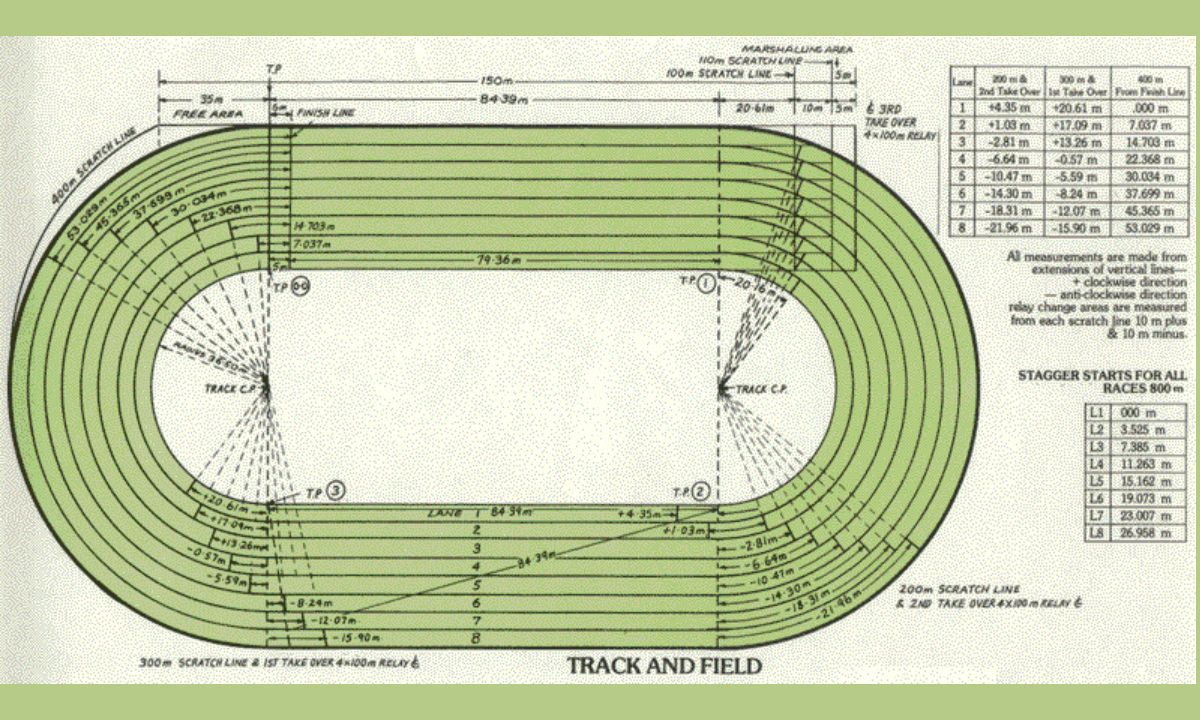
1. Standard IAAF / Olympic / NCAA, 400 Meter Running Track
The 400-meter track represents the gold standard in track and field athletics. Here’s what you need to know:
Key Specifications:
- Track Length: 400 meters (1,312.34 feet)
- Standard Lane Width: 1.22 meters (4 feet)
- Number of Lanes: 8 (minimum for Olympic/International competition)
- Turn Radius: 36.5 meters (119.75 feet)
- Straight Length: 84.39 meters (276.87 feet)
| Track Component | Measurement (Meters) | Measurement (Feet) |
| Total Length | 400 | 1,312.34 |
| Straights | 84.39 x 2 | 276.87 x 2 |
| Curves | 115.61 x 2 | 379.30 x 2 |
| Lane Width | 1.22 | 4.0 |
2. Indoor Running Track Dimensions
Indoor tracks offer year-round training opportunities but come with unique considerations:
Standard Features:
- Most common lengths: 200m and 300m
- Banked turns (10-15 degrees) for higher speeds
- Tighter turn radius than outdoor tracks
- Specialized surface materials for indoor use
3. 300-meter Running Track
The 300-meter track serves as an excellent alternative for facilities with space constraints:
Benefits:
- 25% smaller footprint than 400m tracks
- Ideal for high school facilities
- More cost-effective construction
- Maintains competitive training capability
4. 200-meter Running Track Dimensions
Popular for indoor facilities, 200-meter tracks require careful planning:
- Tighter turns require banking
- Lane stagger increases significantly
- Ideal for winter training
- Common in college field houses
5. Sprint Track
Sprint tracks focus on straight-line speed:
- Standard length: 100-120 meters
- Minimum width: 9.76 meters (8 lanes)
- Safety zones: 3 meters at start and finish
- Level grade throughout
Football or Soccer Field with Running Track Dimensions
When combining a football or soccer field with a running track, careful planning is essential. The standard football field requires 100 yards by 53.3 yards, while soccer fields can vary from 100-130 yards by 50-100 yards.
The running track encircles this field with a buffer zone between the track and field. Most facilities use a 400-meter track configuration, which typically requires a total land area of approximately 7-8 acres to accommodate both the track and field plus necessary amenities.
Combined Facility Requirements:
- Standard football field: 100 yards x 53.3 yards
- Soccer field: 100-130 yards x 50-100 yards
- Track oval surrounds field
- Buffer zones between track and field
“A well-designed multi-use facility can serve both track athletes and field sports effectively, maximizing community resources.” – American Sports Builders Association
Considerations for Choosing the Right Track for Your Facility
Your choice of track should align with your facility’s primary purpose. Consider the level of competition you’ll host, from high school meets to collegiate events.
Climate plays a crucial role – areas with harsh winters might benefit from indoor tracks. Budget constraints will influence surface material choices and overall design. Also think about your maintenance capabilities, as different track surfaces require varying levels of upkeep.
Key Decision Factors:
- Available space
- Budget constraints
- Primary use cases
- Climate considerations
- Maintenance capabilities
Running Track Facility Layout and Floor Plan
A well-designed track facility maximizes flow and functionality. The layout should include clear pathways for athletes, officials, and spectators. Strategic placement of entry points helps manage crowd movement during events.
Equipment storage areas need convenient access to the field and track. Consider wind patterns when positioning field events, and ensure adequate visibility from spectator areas to all competition zones.
Essential elements to consider:
- Spectator Areas: Bleacher placement and capacity
- Support Facilities: Equipment storage, restrooms
- Technical Spaces: Timing systems, press box
- Access Points: Emergency vehicles, maintenance equipment
Essential Amenities for the Track and Field Facility
Modern track facilities require core amenities to function effectively. These include locker rooms, restrooms, and equipment storage. A medical treatment room is essential for athlete safety.
Officials need dedicated spaces for meet management. Spectator amenities like concession stands and restrooms should be easily accessible. A press box with timing system integration enables proper event management and recording.
Modern track facilities require careful planning for amenities:
- Locker rooms and changing areas
- Medical treatment rooms
- Officials’ rooms
- Concession stands
- Public restrooms
- Equipment storage
- Press facilities
How to Fund the Construction of a Track and Field Facility?
Funding typically comes from multiple sources. Public schools often use bond measures or district funding. Private facilities might seek corporate sponsorships or naming rights deals.
Government grants, particularly for community facilities, can provide substantial support. Consider crowdfunding for specific components like equipment or bleachers. Local business partnerships can help fund maintenance and upgrades over time.
Funding Sources:
- Grants
- USATF Foundation grants
- State athletic association funding
- Community development grants
- Sponsorships
- Local business partnerships
- Naming rights
- Equipment sponsorships
- Crowdfunding
- Online platforms
- Community campaigns
- Alumni networks
- Loans
- Municipal bonds
- Sports facility financing
- Development loans
Calculate the Cost of Your Track Facility Construction
Track construction costs vary widely based on location and specifications. Basic tracks might start at $500,000, while complete facilities with premium surfaces and amenities can exceed $3 million.
Surface choice significantly impacts cost – synthetic surfaces range from $75-200 per square yard. Factor in site preparation, drainage systems, lighting, and support facilities. Maintenance costs typically run 1-2% of construction costs annually.
Cost Factors:
- Surface material: $75-200 per square yard
- Base construction: $300,000-600,000
- Drainage systems: $50,000-100,000
- Lighting: $80,000-150,000
- Support facilities: $200,000-500,000
Conclusion
Creating a successful running track facility requires careful planning, proper dimensioning, and thoughtful consideration of user needs. Whether you’re building a professional stadium or a community track, following these guidelines will help ensure your facility meets its intended purpose while providing a safe and effective training and competition venue.
